

PU Foams Foams
Âncora PU (Polyurethane) Expansive Foam is a product for the construction market.
Packaged in aerosol cans, it cures in the presence of humidity.
Once cured, it has adhesion, thermal and acoustic insulation properties.
FEATURES AND ADVANTAGES
- Alto poder de preenchimento com excelente adesão.
- Ótimo custo-benefício.
- Não agride o meio ambiente.
- Disponível nas versões espuma baixa expansão para uso com pistola e espuma alta expansão com utilização de bico aplicador.
- Classe FogoDIN 4102: B3.
- Estrutura celular 60% aberta.
MAIN APPLICATIONS
- Fixing doors, jambs and windows
- Masonry wedging
- Installing window frames
- Filling gaps
- Thermal and acoustic insulation
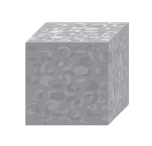
Concrete
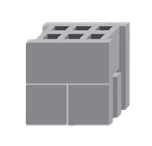
Concrete block
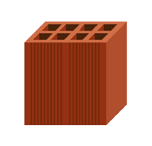
Ceramic block
Structural Block
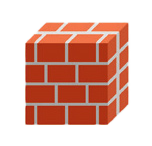
Solid brick
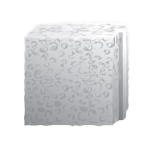
Stone

Metal
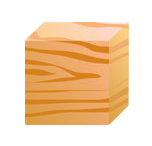
Madeira

Drywall, Cement and OSB

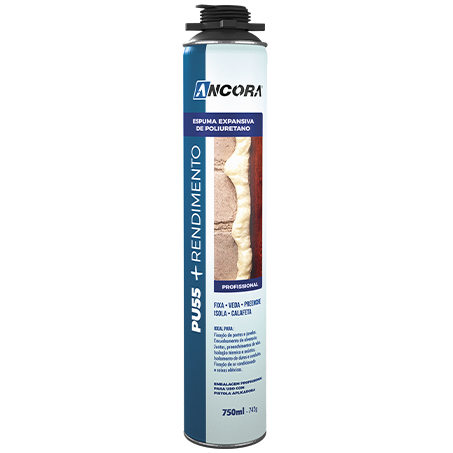
TECHNICAL DATA
| Code | Application device | Volume Weight | Skin formation | Cutting time | Density at 23ºC | Income | Physical properties | Temp. resistance | Application temperature | |||
|---|---|---|---|---|---|---|---|---|---|---|---|---|
| Compression | Tensile | Membership | Isolation factor factor |
|||||||||
| PU500 | Applicator nozzle | 500 ml 340 g |
7~18 min | 2h (25ºC) | 17~22 kg/m³ | 17l | 100 kPa | 30 kPa | 80 kPa | 34 Mw/m.k | -40ºC/+100ºC | +5ºC/+35ºC |
| PU55 | Pistol | 750 ml 742 g |
8~19 min | 2h (25ºC) | 17~22 kg/m³ | 42l | 90 kPa | 30 kPa | 70 kPa | 34 Mw/m.k | -40ºC/+100ºC | +5ºC/+35ºC |
TECHNICAL DATA
| Code | Device application |
Volume Weight | Application temperature temperature |
Description |
|---|---|---|---|---|
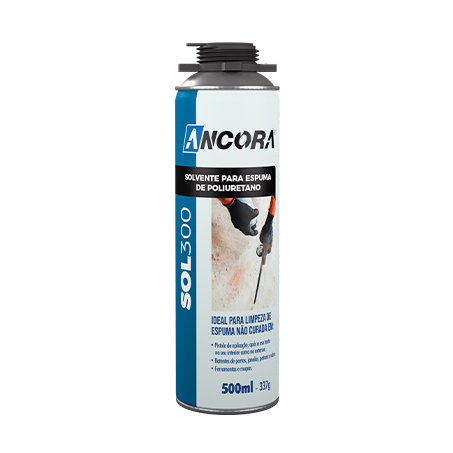
| SOL300 | Spray Spray gun |
500 ml/337 g | -10ºC~+30ºC | Uncured foam remover/gun cleaning solvent. |
| PPUTF | Pistol | - | - | Gun for applying PU55 foam. |
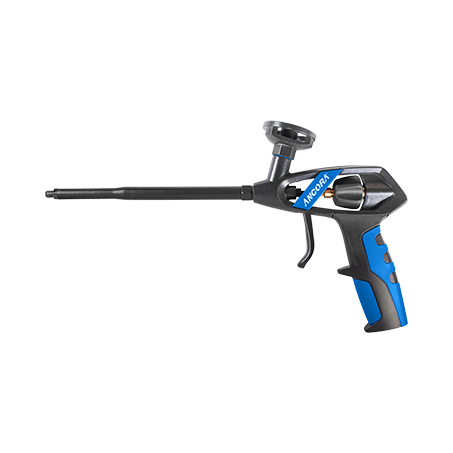
APPLICATION CONDITIONS
- Operating temperature between -5°C and +30°C.
- The temperature of the can during application should vary between +10°C and +25°C, with the best results at +20°C.
- Performance depends considerably on working conditions, temperature, air humidity and expansion area.
- Surfaces must be free of dust, loose particles and oil.
- The cured foam can be painted with water-based paint.
- Always moisten the surface where the foam will be applied for best results.
APPLICATION EXAMPLE
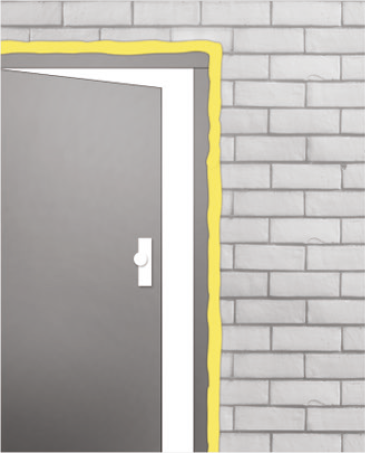
Installation of doors and frames.
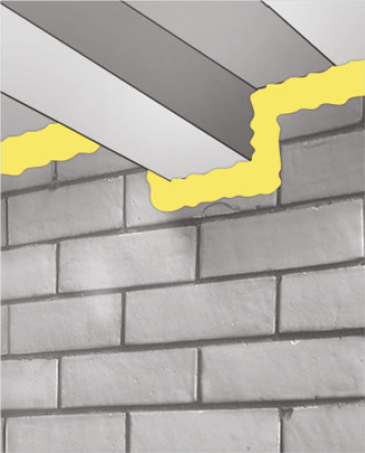
Masonry wedging.
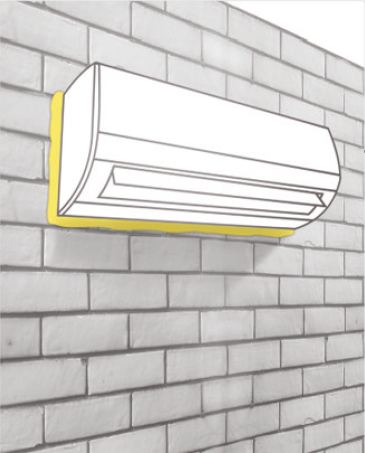
Equipment sealing.
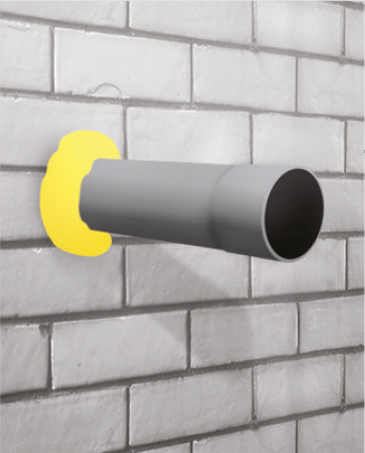
Pipe closure.
APPLICATION METHOD
Step: 1/5
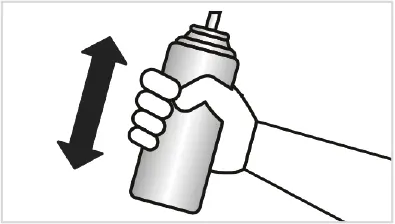
Shake the can vigorously for 10 seconds before use.
Step: 2/5
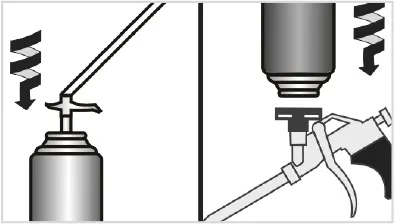
Connect the applicator trigger to the valve. Screw the can onto the applicator.
Step: 3/5
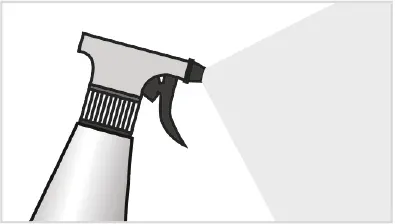
Clean the surface to be applied and moisten with clean water.
Step: 4/5
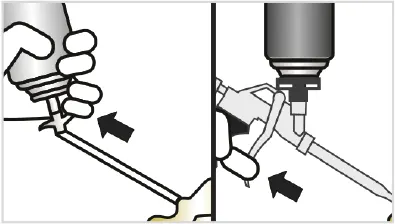
Invert the can (upside down), pull the trigger and apply the foam.
Step: 5/5
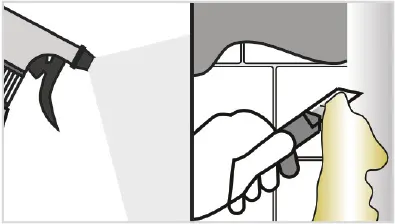
Moisten after application.** After 2 hours, cut off excess. Fully cured after 48 hours.
CLEANING THE GUN
Step: 1/3
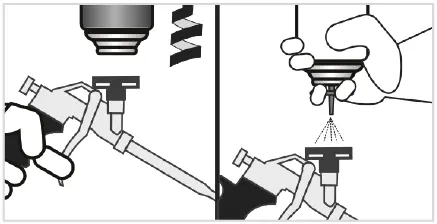
Remove the foam can and use SOL300 solvent to clean the foam residue from the gun coupling.
Step: 2/3
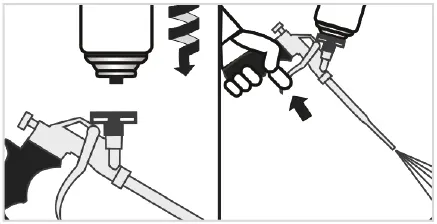
Attach the SOL300 solvent to the PPUTF gun by screwing it in. Pull the trigger several times until all foam residue is removed.
Step: 3/3
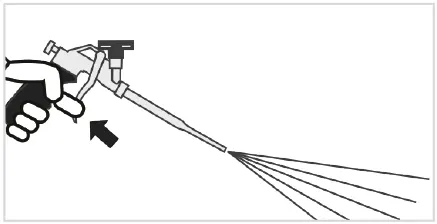
Disconnect the solvent and pull the trigger until all the solvent has been removed.
